Be the first to write a review
0%
(0)
0%
(0)
0%
(0)
0%
(0)
0%
(0)


🇵🇭 Nationwide Shipping & Delivery Guarantee
We provide Free Shipping across the Philippines (via LEX, Flash Express, or specialized heavy-freight carriers). Every order is 100% tracked and insured.
🚚 Delivery Timeline
🛡️ 100% Delivery Protection (Loss & Damage Covered)
📦 Large Battery & Heavy Item Shipping
Note: We currently only ship to valid addresses within the Philippines. External delays due to carrier schedules or severe weather conditions may occasionally occur.
👉 For complete terms, please visit our [Shipping Policy].
Our batteries come with a 5-year warranty, which can be extended to 7 years total upon product registration. Accessories are covered by a 1-year warranty, and like-new (refurbished) batteries include a 1-year warranty.
For full terms, conditions, and claim details, please visit:


Compared to a 12V 280Ah LiFePO4 battery, it offers 11% more capacity while taking up less space. It's ideal for extended outdoor camping trips, RV travel, and boat fishing.

WattCycle lithium batteries offer absolutely safe battery performance. A 200A BMS with over 20 protections and a 250A(1s) peak discharge current allow you to use high-power appliances with peace of mind. It also features an innovative design with an internal metal frame and external tough casing, effectively reducing battery swelling, maintaining cell stability, and allowing for installation and use in any orientation.

Whether you’re charging in 113 °F summer heat or discharging at –4 °F ice-fishing, this battery keeps pace. Charge range: 32 °F to 113 °F (0 °C–45 °C). Discharge range: –4 °F to 140 °F (–20 °C–60 °C). For anyone running a “solar battery 12V 300Ah” system in extreme climates, this pack won’t flinch.

The WattCycle 12V 314Ah LiFePO4 Battery stands up to harsh conditions thanks to its unique full-aluminum internal frame,Which not only reinforces the cell structure but also integrates cooling fins that improve heat dissipation by 30 %. That means during heavy discharge or rapid charging, excess warmth is whisked away faster—protecting cell health and maintaining peak performance. Meanwhile, braided copper wires have been newly added inside the battery, enabling it to provide more than 50% of the power with the minimum voltage drop. This three-tier design makes it one of the safest 12V 300Ah deep cycle battery options on the market.

For those running three 12V 100Ah batteries in parallel, you’d typically combine to 300 Ah. That setup adds weight, wiring complexity, and more points of failure. By choosing one WattCycle 314Ah MINI battery instead. you get additional benefits.

Scale up your array with extra WattCycle battery to build a 4S4P (64.3 kWh) mega-bank ideal for large solar arrays or whole-home backup. your go-to for WattCycle 12V 314Ah batteries that need to grow as your demand does.

| Dimensions (Inches) | 15.12 (L) x 7.64 (W) x 9.76 (H) |
| Weight | 59.52lbs / 27kg |
| Waterproof Rating | IP65 |
| Warranty | Sign Warranty to extend for 7 years |
| Case Material | ABS+PC/UL94 V-0 |
| Terminal | M8 bolts |
| BMS | 12.8V/200A |
| Standard/Max. Continuous Charging | 62.8A/200A |
| Max. Continuous Discharge Current | 200A |
| Over-current Discharge Protection | 210A±10A |
| Over-current Charge Protection | 210A±10A |
| Short Circuit Current Protection | Support |
| Release Condition | Cut Load |
| Charging High Temperature Protection | 140°F ~ 158°F / 60°C ~ 70°C |
| Discharging High Temperature Protection | 149°F ~ 167°F / 65°C ~ 75°C |
| High Temperature Protection Release Condition | Drop by 41°F ~ 59°F / 5°C ~ 15°C |
| Charging Low Temperature Protection | 23°F ~ 41°F / -5°C ~ 5°C |
| Discharge Low Temperature Protection | -13°F ~ 5°F / -25°C ~ -15°C |
| Low Temperature Protection Release Condition | Rise by 41°F ~ 59°F / 5°C ~ 15°C |
| Rated Voltage | 12.8V |
| Standard Charging Voltage | 14.6V±0.2V |
| Shipping Voltage | 12.8V~13.5V |
| Shipping Capacity | 50% |
| Cycle Life | 6000@80%DOD |
| Self Discharge Rate | <3%/Month |
| Series & Parallel Connections | Max. 4 Parallel 4 Series |
| Cell Certifications | IEC/RoHS/CE/FCC/UN38.3/Class 9 |
You can connect the battery to a 3000W inverter, but one battery is not designed to support the inverter’s full 3000W output continuously.The battery’s 200A BMS provides up to approximately 2560W of DC output at 12.8V. After accounting for inverter efficiency, cable losses and low battery voltage, we recommend keeping continuous AC loads at approximately 2000W or below when using one battery.A 3000W inverter may still be useful because it provides additional surge capacity for appliances such as refrigerators, pumps and air conditioners. However, high-power appliances should not be operated simultaneously if their combined load could exceed the battery’s discharge limit.For continuous loads approaching 2500–3000W, use two compatible batteries in parallel or consider a 24V or 48V battery system.
The WattCycle 12V 314Ah Mini stores 4019Wh of energy. Estimated runtime depends on the air conditioner’s running wattage, inverter efficiency, compressor cycling and other electrical loads in the RV.
Approximate continuous runtime with 90% inverter efficiency:
Air Conditioner Load & Estimated Runtime
Actual runtime may be longer when the compressor cycles instead of running continuously. It may be shorter when the battery also powers a refrigerator, lighting, fans or other RV appliances.
An RV air conditioner may also require a high startup surge. A compatible inverter and soft-start device are recommended to reduce startup current and prevent the BMS or inverter from disconnecting.
In many RV, van and off-grid solar installations, one WattCycle 314Ah Mini can replace three 100Ah batteries.
One 314Ah battery provides:
Three 100Ah batteries provide approximately 300Ah of total capacity, so the WattCycle 314Ah Mini offers slightly more stored energy in a single battery.
However, three batteries may provide greater discharge current when each battery has its own BMS. They may also offer limited redundancy if one battery is disconnected. Always compare the total BMS current, available installation space and required inverter power—not capacity alone.
A 200A BMS can be used with a 2500W inverter, but the inverter should not be operated at its full rated output continuously.At full output, a 2500W inverter may draw more than 200A from a 12V battery after inverter losses are included. This could activate the battery’s overcurrent protection, especially when battery voltage is lower or an appliance has a large startup surge.
For one WattCycle 12V 314Ah Mini battery, we recommend:
For continuous loads above approximately 2000W, two compatible batteries in parallel provide more current capacity and additional operating margin.
Remember that inverter size and actual appliance load are different. A 2500W inverter does not continuously draw 2500W unless the connected appliances require that amount of power.
Cable and fuse sizing depends on the inverter, maximum current, total cable length, installation temperature and applicable electrical standards.
For high-current installations approaching 200A, short cable runs commonly require heavy-gauge copper cable such as 2/0 AWG or 4/0 AWG. Longer cable runs may require a larger conductor to control voltage drop.
A properly rated DC fuse should be installed in the positive cable as close to the battery as practical. The fuse must protect the cable and must not exceed the cable’s safe current rating.
Depending on the system design, a 200A to 250A DC-rated fuse may be considered for a high-current installation, but this is not a universal recommendation. Always follow the cable and fuse specifications provided by the inverter manufacturer.
Important installation guidelines:
Incorrect cable or fuse selection may cause excessive voltage drop, unwanted inverter shutdowns, cable overheating or fire risk.
The battery measures approximately: 15.12 × 7.64 × 9.76 inches
It weighs approximately: 59.5 lb
Measure the usable internal space of your battery compartment before ordering. Do not compare only the compartment opening, because the interior may contain brackets, wheel-well sections, plumbing or wiring that reduces the available space.
Allow additional clearance for:
A simple way to confirm fitment is to make a cardboard template using the battery dimensions and place it inside the compartment. Also confirm that the mounting surface can safely support the battery during braking, cornering and travel.The battery should be securely restrained and should not be installed where it may be exposed to direct engine heat, standing water or physical impact.
All three versions provide approximately 314Ah and 4019Wh of energy in a compact 12V battery format. The main differences are monitoring and cell-balancing features.
Basic Version
Choose the Basic version when you want maximum capacity at the lowest price and do not require smartphone monitoring. It is suitable for fixed solar, RV and backup-power installations that use a separate battery monitor or shunt.
Bluetooth Version
Choose the Bluetooth version when you want to view battery information from a compatible mobile app. Depending on the app and battery status, available information may include state of charge, voltage, current, temperature and protection status.
Super Version
Choose the Super version when you want Bluetooth monitoring combined with 3A active balancing. Active balancing helps reduce voltage differences between cells and is particularly useful for demanding applications, frequent cycling and long-term battery management.The best version depends on how you plan to monitor the system. The Basic model provides the strongest value, the Bluetooth model is the easiest choice for most RV owners, and the Super model offers the most advanced battery-management features.
Yes. Compatible WattCycle batteries may be connected in parallel to increase total capacity and available discharge current.
For example, two 314Ah batteries in parallel provide approximately:
Use batteries of the same model, capacity, voltage and similar age. Before connecting them, charge each battery separately to the same voltage.
For a balanced parallel system:
Yes. The battery can supply power to connected DC loads or an inverter while receiving energy from a properly configured solar charge controller.The solar panels do not connect directly to the battery. A charge controller compatible with LiFePO4 batteries must be installed between the solar array and the battery.
During daytime operation, solar power may supply part of the load while also charging the battery. Whether the battery gains or loses energy depends on the balance between solar production and total system consumption.
Always confirm that the charge controller uses appropriate LiFePO4 charging settings and does not include an automatic lead-acid equalization cycle.
The ideal solar array depends on local sunlight, available roof space and how quickly you need to recharge the battery.
Approximate recharge times under strong solar conditions, before accounting for system losses:
Solar Input Approximate Recharge Time
400W 10–12 hours
600W 7–8 hours
800W 5–6 hours
1000W 4–5 hours
Real-world charging may take longer because panel output changes with weather, temperature, shading, panel angle and charge-controller efficiency.
For many RV installations, a 600W to 1000W solar array provides a practical balance between daily energy recovery and available roof space.
A separate battery monitor is not required for the battery to operate, but it is recommended when accurate state-of-charge information is important.Voltage alone is not a reliable way to estimate the remaining capacity of a LiFePO4 battery because its voltage remains relatively stable through much of the discharge cycle.
A shunt-based battery monitor measures current entering and leaving the battery and can provide a more useful estimate of:
Customers who want built-in smartphone monitoring may prefer the Bluetooth or Super version.
Changed all my sealed lead acid batteries with just two Watt Cycle batteries. Installation was easy and the app is a game changer.
So far the battery has operated great, but in order to use the Wattcycle app, you can't be more than a few feet away from the battery. There is a plug on the BMS board for WiFi, so hopefully Wattcycle will take advantage of that, sooner than later
Did you know this product along with a ecoflow smart generator power adapter can be used with power kit V1 and V2 we camp off grid but many times we are close enough to use a golf cart (50 mile range) 6.3kwh battery in cart. You can use the adapter to recharge the golf cart, and I now have the ability to have power back up when the golf cart isn't being used . I am also going to purchase another cable and take my Delta 3 with a zoupw 480 watt solar panel power my tools and recharge my cart at same time. To cool for school!!!!! I will be showing these features memorial day week next year thank you!
we have recieved 2 batterys very please whith te races we like 2 buy 2 more perhaps eith a discount
Great process of order. Still not tried the battery, but all good so far!
I bought this mini battery to run the electronics on my boat. It should have plenty of power to run everything and not take up much room in the compartment
Hard to give an objective review this soon after purchase. But, the battery is 3x more powerful than my age and half the weight. I switched my two house batts to these and I doubt I would ever run them down in my boat. I a, using the 24v 314ah battery to run my AC onboard and that battery performs amazing. Hours of run time to get to 75%! High hopes for wat cycle. I appreciate that they own mistakes and provide explanations of the fix implemented and back it up with a white paper. Ty
Добър уред! Работи много добре и бързо зарежда батерията от 300A. Лек и компактен. Не- загрява много по време на работа.
Като недостатък бих отбелязал че когато зареди акомулатора в последствие не продължава да го поддържа(при консумация не се включва автоматично да дозареди).
Le vino de maravilla a mi ecoflow Delta2 max y la realidad que ahora su autonomía y su rendimiento es es el doble y triple dependiendo que estés cargado, es un éxito, voy a comprar otra,por ese precio no hay una mejor que ésa.
Right now, I need to be within about 6 ft of the battery in order to get a reading like the capacity of what remains. It would be very helpful if I could get a reading 12 to 15 ft away instead of almost right next to the battery. Other than that, the battery has been great so far
Battery seems OK but Support is terrible. Documentation has ZERO information on their "4-function" switch, which has only two unlabeled positions and appears not to work at all. The US based phone support number is never answered and only generates an email from someone (NOT Tech Support) in China. So there IS NO U.S. based support. Not impressed.
Ordering was very easy.
The order arrived quickly once we got the physical address straightened out.
I’ll be buying more of these batteries from Wattcycle.
Online shopping here was so easy.
The only bit that I'd recommend is on the page where you're selling the server rack battery & cable, is to have a list of all the unit models that the cable is supported by - it'd just help those buying the cable, to be able to cross reference against what they're seeing on the company's website.
I thought you could hook this to your main panel with power applied from grid and it would supply the panel when the grid power went down and not feed back to grid because it had ct to keep it from feed back to grid. that is what i thought a hybrid inverter did. this does not do that you have to manually disconnect from grid then connect to main panel to power your house. Other then that is works good supplies plunty of power and charges batteries well.
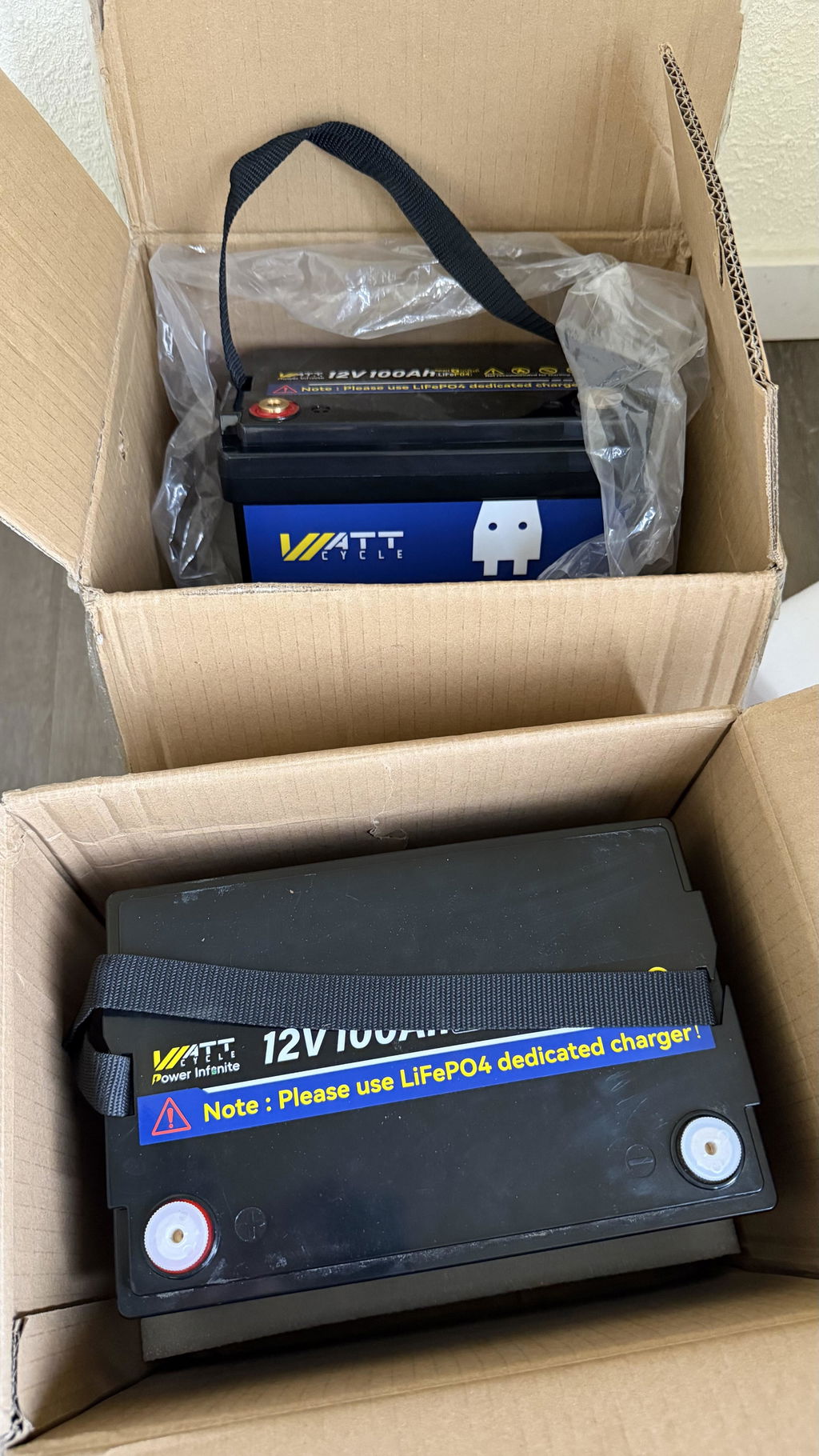
Shopping was easy, the web page has good information about the products and shipping was fast and free. I purchased two batteries for my rv, they are installed and working great.
I got a Cyccle Volt (random amazon purchase) 51.2V 50Ah LFP battery attached to a Delta 2 using this cable. At first I didn't notice anything. The Delta doesn't go out of its way to rebalance the power station with the external battery. But when you charge the power station and fully discharge it, you notice it takes a while to discharge, and the recharge time + estimated run time all seems a bit long compared to what you'd expect; it's as if the D2 suddenly has 3.5kWh (1kWh D2 + 2.5kWh external battery). So it is working as it's supposed to.
What an amazing addition to the Delta series! Those D2 and D2Max batteries (and compatible D3's) can be used in so many circumstances if you add a 2.5 or even 5kWh external battery. I think you can daisy chain multiple identical external batteries in parallel too although I don't have such a setup to try.
Both battery packs are connected and successfully charging in lieu of the next blackout
I purchased the WattCycle 48V 100Ah server rack battery to pair with my EcoFlow Delta 2 as backup power for my home's gas furnace, water heater controls, and Starlink.
Performance has been excellent. The battery charged to 100% without issues and successfully powered my system through a nearly 10-hour simulated power outage. It also recharged properly afterward, and the Bluetooth app worked well for monitoring voltage, current, state of charge, and temperature.
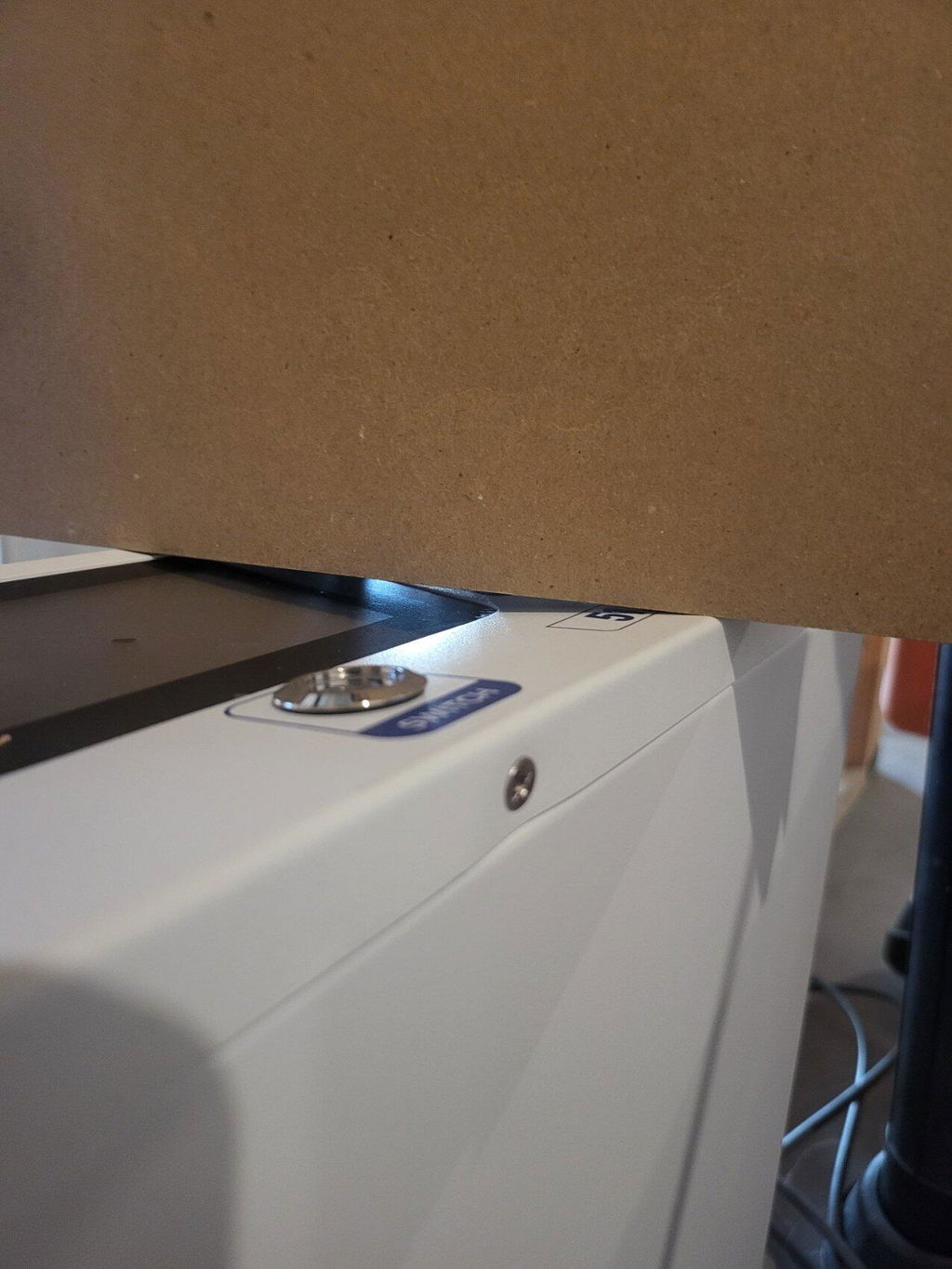
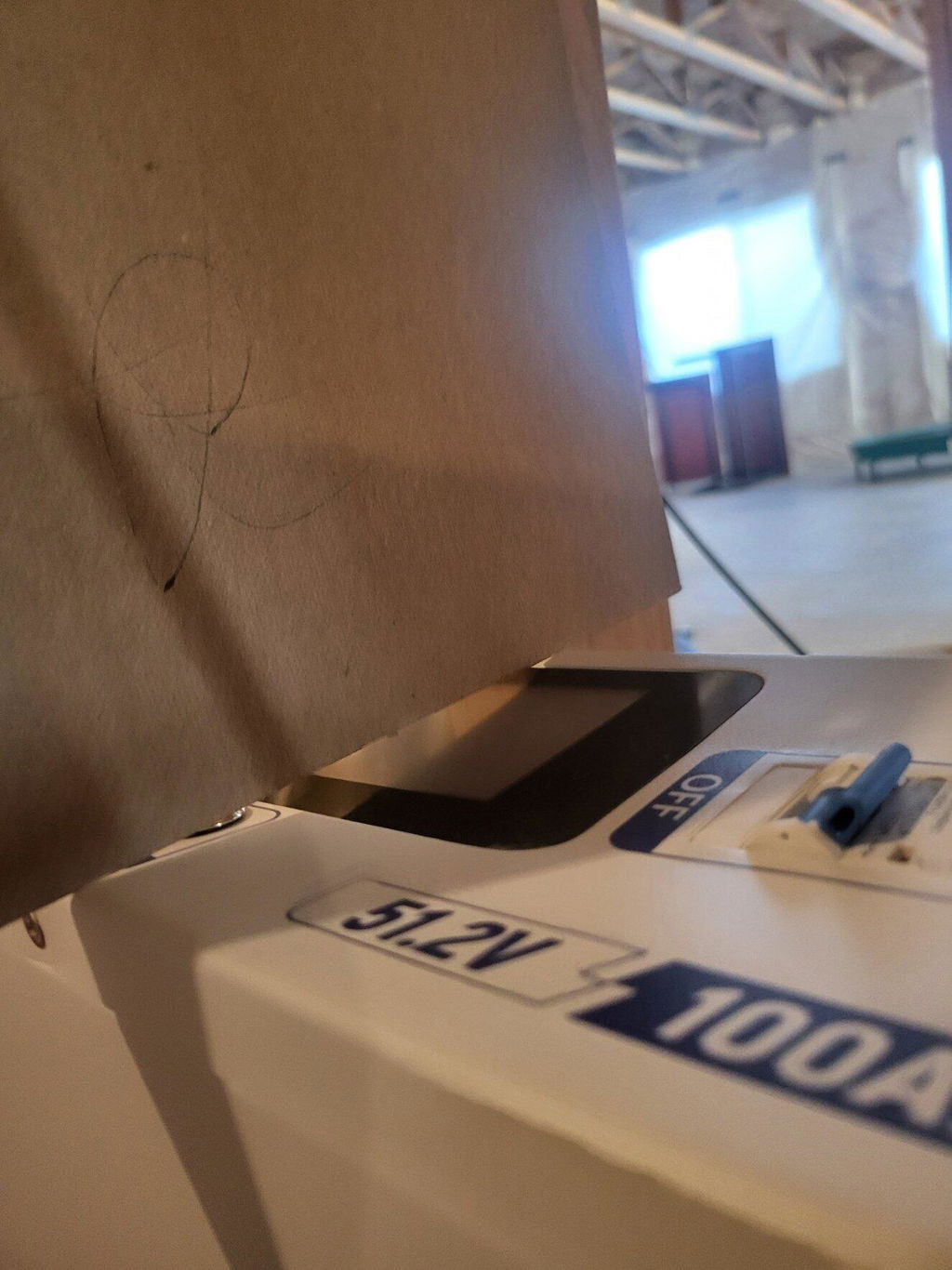
My only complaint is the condition it arrived in. The top cover was bent enough that there is a noticeable gap between the lid and the case (see photos). The battery functions normally, but cosmetic damage like this shouldn't happen on a heavy server rack battery. I suspect it was damaged during shipping or wasn't caught during quality control before it left the factory.
If the case had arrived undamaged, I would have given it 5 stars. The battery itself has performed exactly as advertised, so I'm keeping it because it works well. I just hope WattCycle improves their packaging and quality inspection for future customers.